


Triply Stainless Steel Cookware Explained: Why It Cooks Better Than Regular Steel
If you've shopped for cookware recently, you've probably seen the word "triply" (or "tri-ply") on the better pots and pans — usually with a higher price tag. So what exactly is it, and is it worth the upgrade?
The short answer: triply cookware solves the single biggest problem with ordinary steel vessels — uneven heating. If your dal sticks and scorches in the middle while the edges stay cool, or your milk catches at the bottom no matter how carefully you watch it, you've felt the limits of single-layer steel.
This guide explains what triply actually is, how it works, and why it genuinely cooks better — without the jargon.
First, What Does "Triply" Mean?
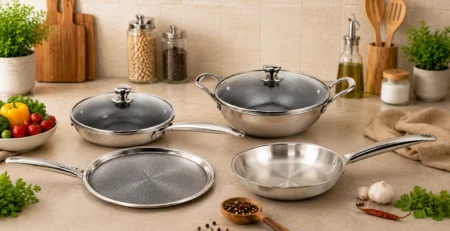
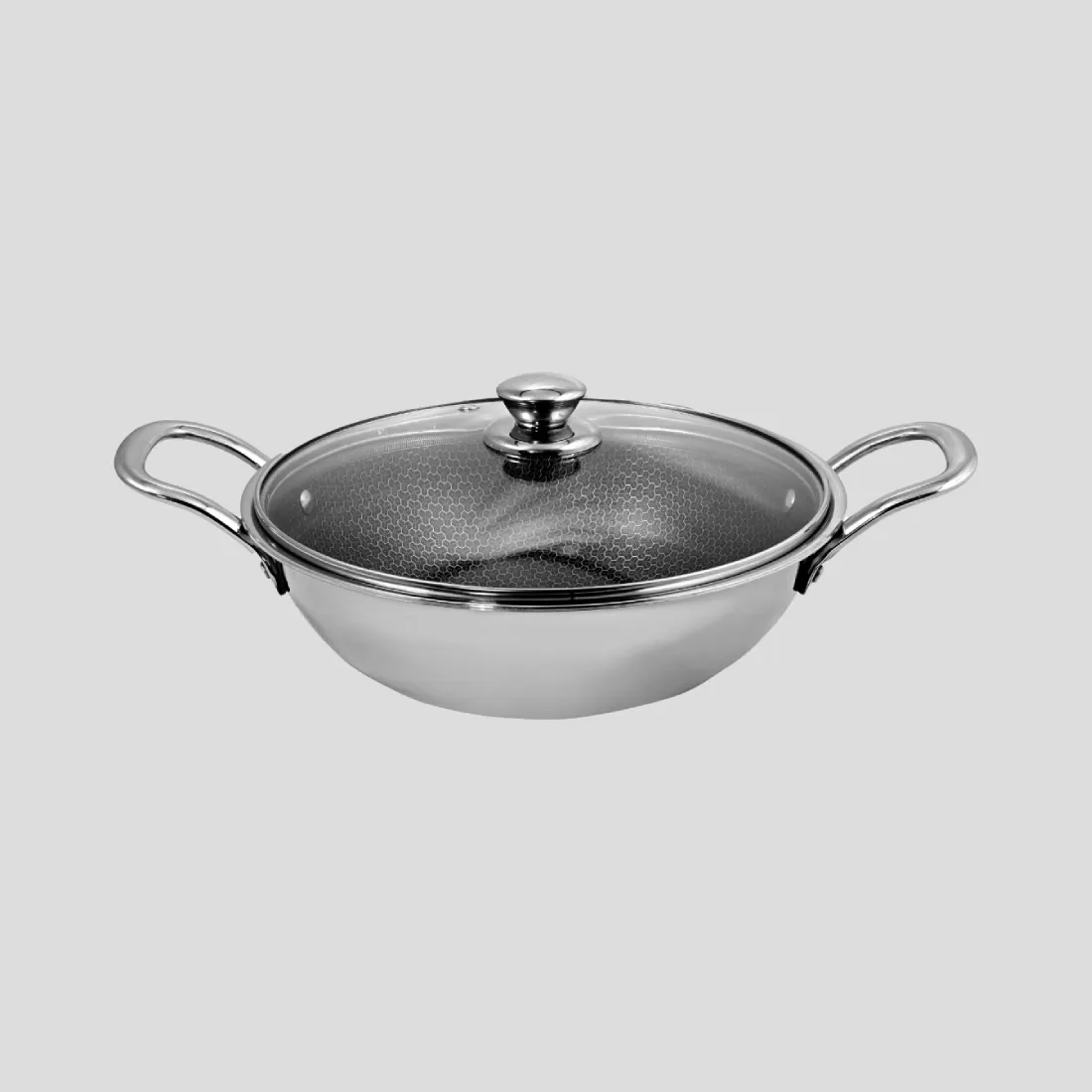
"Triply" means the cookware is built from three bonded layers of metal, fused together into a single wall. Think of it like a metal sandwich:
Regular steel cookware, by contrast, is usually a single layer of stainless steel. Steel looks great and lasts forever, but on its own it's actually a poor conductor of heat. That's the root of the problem triply was designed to fix.
The Science: Why Single-Layer Steel Heats Unevenly
Stainless steel doesn't spread heat sideways very well. So when you put a single-layer steel pot on a flame, the metal directly above the burner gets very hot very fast, while the areas away from the flame lag behind.
The result is hot spots — concentrated zones of intense heat right over the burner. This is why food sticks and burns in the centre of a thin steel pan, why milk boils over from one spot, and why you have to keep stirring constantly.
Triply fixes this by sandwiching an aluminium core between the steel layers. Aluminium conducts heat roughly 15 times better than steel, so it grabs the heat and spreads it evenly across the entire base and up the sides. The steel surfaces you cook on then heat uniformly — no hot spots.
What This Means in Your Kitchen
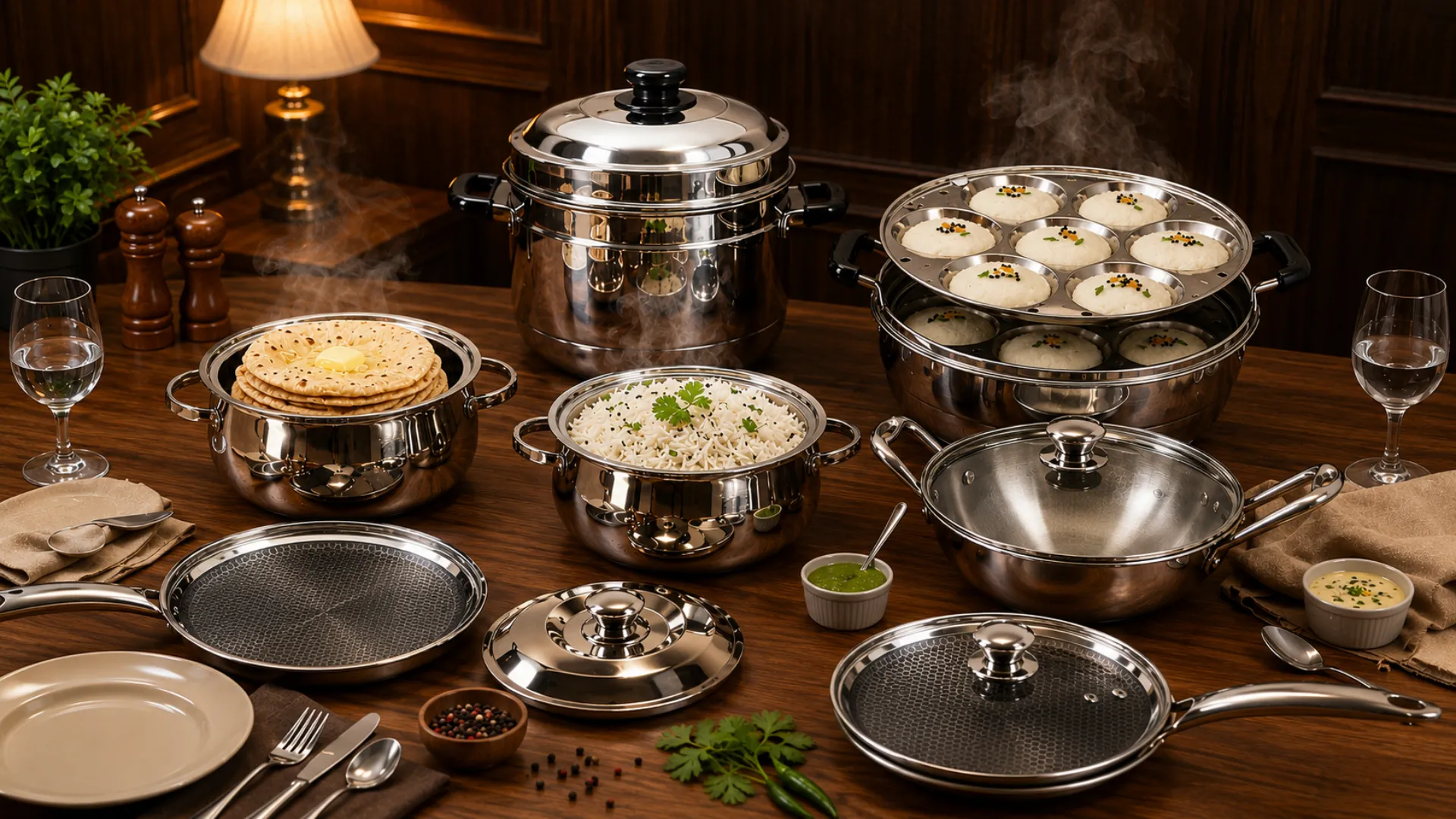
The even heating of triply isn't just a technical detail — you feel the difference every time you cook:
Food cooks evenly. Your sabzi cooks through at the same rate across the whole pan, instead of burning in the middle and staying raw at the edges.
Far less sticking and burning. With no concentrated hot spot, milk, dal, kheer, and gravies are much less likely to catch and scorch at the bottom.
Better browning and sautéing. Even heat means even browning — onions, paneer, and tadka turn out consistent and golden, not patchy.
Lower flame, less gas. Because triply heats efficiently and retains heat well, you can cook on a lower flame and still get great results, which saves fuel over time.
Less stirring, more freedom. You don't have to babysit the pot constantly to stop one spot from burning.
Triply vs. Regular Steel: An Honest Comparison
Both have their place — and a complete kitchen often uses both. Regular steel is brilliant for boiling, steaming, storage, and everyday tasks where even heat isn't critical. Triply shines when cooking technique and heat control matter.
The takeaway isn't that regular steel is "bad" — it's a dependable workhorse. Triply is simply the upgrade you reach for when you want restaurant-level heat control and easier everyday cooking.
How to Spot Genuine Triply Cookware
Not everything labelled "triply" is built the same. Here's how to check for the real thing:
Look at the rim. Genuine triply shows three distinct bonded layers when you look at the cut edge of the cookware. You can often see the lighter aluminium core sandwiched between the two steel layers.
Feel the weight. Triply is reassuringly heavier than thin single-layer steel because of the dense aluminium core. A flimsy, lightweight "triply" pan is a red flag.
Check the base. The three layers should run through the entire body — base and sides — in true triply (sometimes called "full triply"), not just a disc stuck to the bottom.
Confirm induction compatibility. Quality triply works on both gas and induction, thanks to the magnetic stainless steel outer layer.
Caring for Your Triply Cookware
If even a single drop escapes, that container is letting air in too. It's time to upgrade.
Frequently Asked Questions
Is triply cookware worth the extra cost?
For everyday cooking — gravies, milk, sautéing, browning — yes. The even heat means less burnt food, less wasted gas, and easier cooking. It's a one-time investment that lasts decades.
Can I use triply cookware on induction?
Yes. The magnetic stainless steel outer layer makes genuine triply fully induction-compatible, as well as gas-friendly.
Is triply better than nonstick?
They're different tools. Nonstick is great for eggs and low-oil cooking but wears out over a few years. Triply lasts a lifetime, handles high-heat searing, and has no coating to scratch off — though it does need a little oil to prevent sticking.
Does food stick to triply steel?
Far less than to thin single-layer steel, because of the even heating. Preheating the pan and adding oil before food makes it virtually stick-free for most cooking.
Is triply stainless steel safe?
Yes. The cooking surface is food-grade stainless steel, which is non-reactive and doesn't leach into food — the aluminium core is sealed inside and never touches what you cook.
The Bottom Line
Triply stainless steel cookware exists to solve the one thing ordinary steel can't do well: spread heat evenly. By bonding an aluminium core between two layers of steel, it gives you even cooking, less sticking, better browning, and lower gas bills — all in a vessel that lasts a lifetime and works on gas and induction alike.
Regular steel still earns its place for boiling and storage. But when it comes to actual cooking, triply is the upgrade your kitchen will thank you for.