


Honeycomb Tawa, Kadhai & Frying Pans: How the Honeycomb Finish Actually Works
You've probably seen them: shiny stainless steel tawas and kadhais with a distinctive honeycomb-patterned cooking surface. They promise the best of both worlds — the durability and safety of steel, with food that doesn't stick like it normally does on bare steel.
But how does a simple pattern do that? Is it really "nonstick"? And is it worth choosing over a regular tawa or a coated nonstick pan?
This guide explains exactly how the honeycomb finish works, what it does well, and how to get the best results from it.
What Is a Honeycomb Finish?
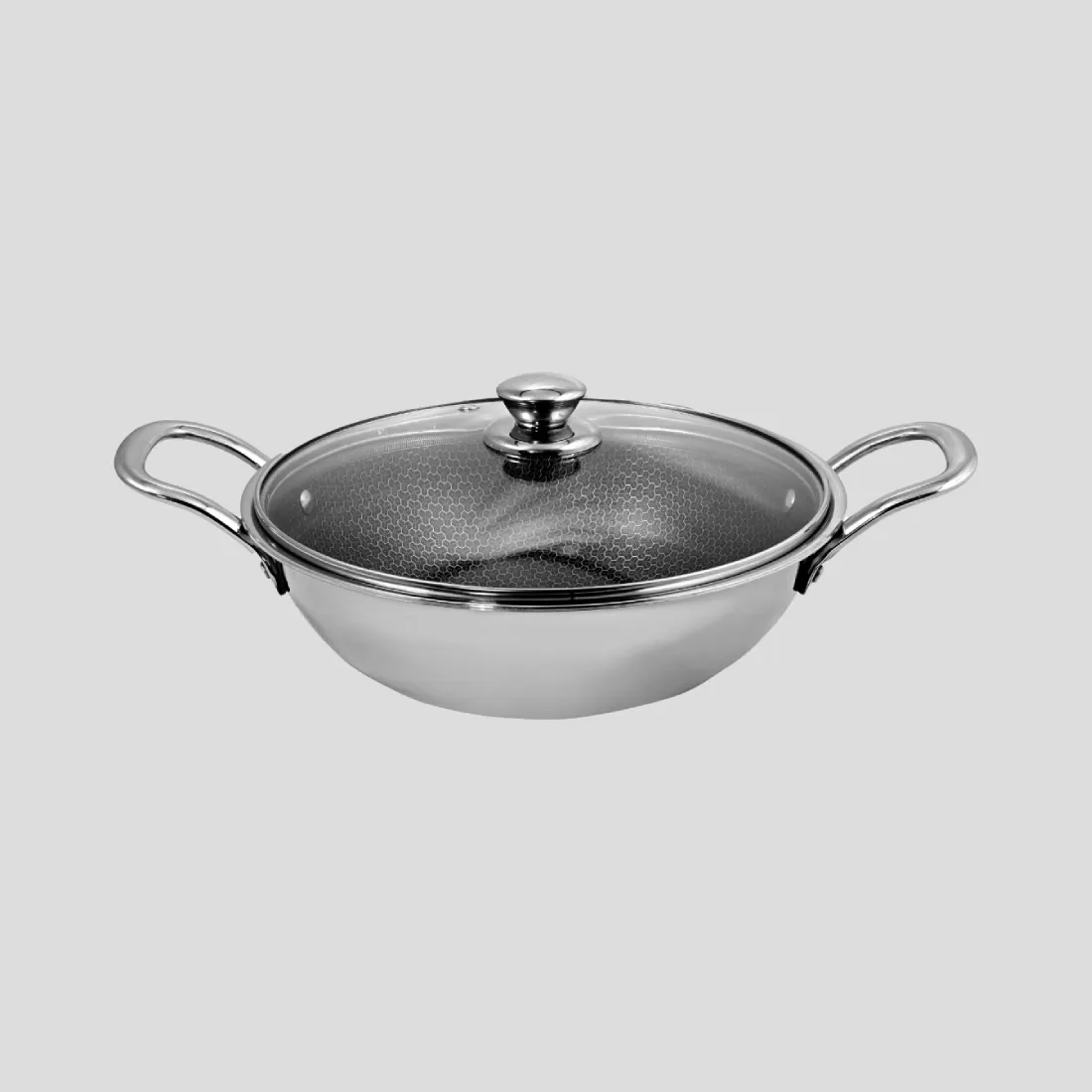
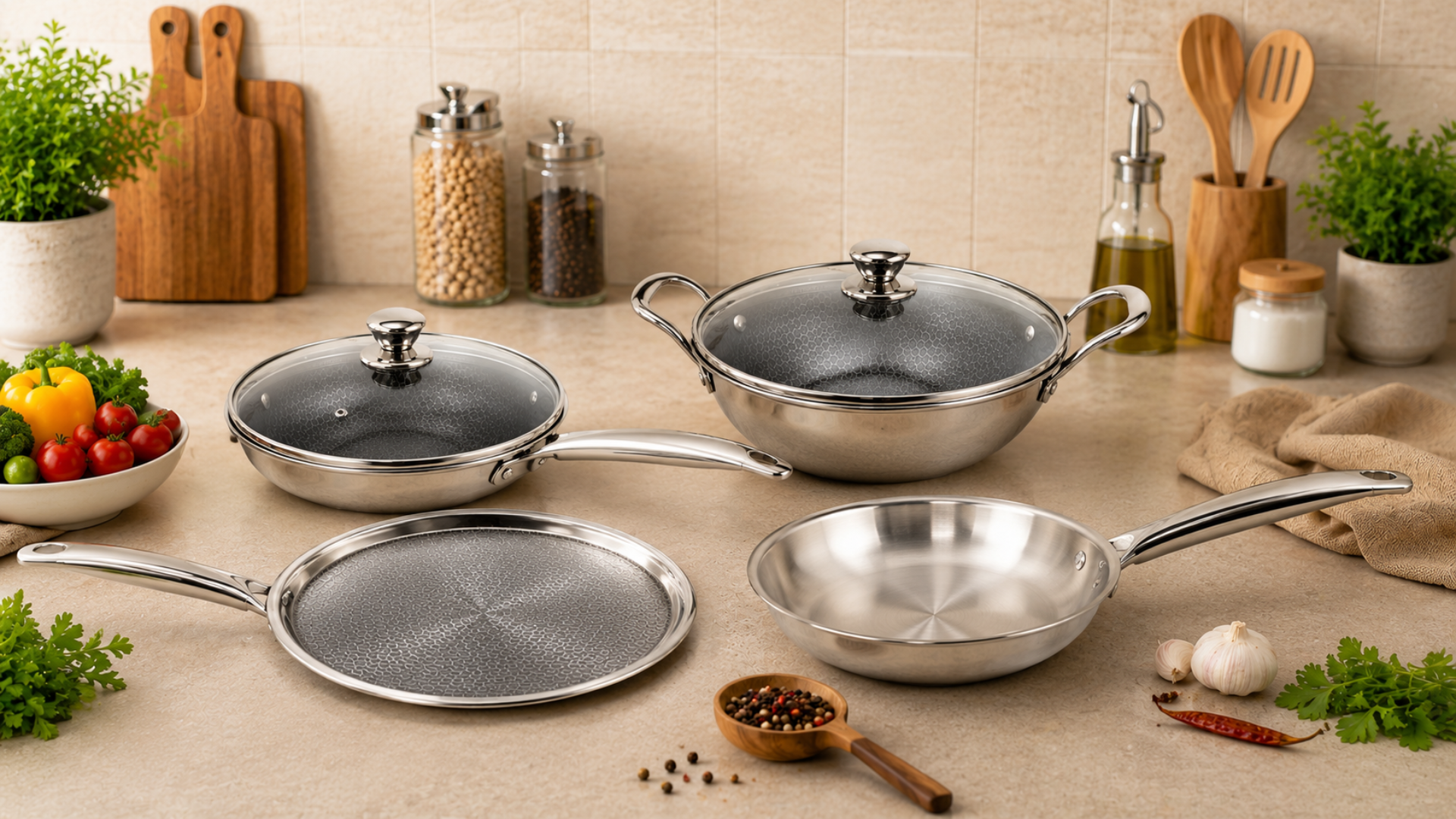
A honeycomb finish is a hexagonal pattern laser-etched or pressed into the stainless steel cooking surface. Up close, it looks just like a beehive's honeycomb — a grid of raised ridges with tiny recessed pockets in between.
This isn't a coating. There's no chemical layer, no Teflon, nothing sprayed on. It's the steel itself, textured into a 3D surface. That's the key distinction: a honeycomb pan is 100% stainless steel, with the non-stick behaviour coming from its shape, not from a coating that can scratch or wear off.
How the Pattern Reduces Sticking
The magic is in the geometry. Here's what actually happens when you cook:
The raised ridges lift food off the flat surface. Your roti, dosa, or paneer mostly touches the high points of the honeycomb pattern, not a continuous flat sheet of metal. Less direct contact means less surface area for food to grip onto.
The recessed pockets hold a thin film of oil. The little hexagonal valleys trap and hold oil exactly where it's needed, creating a continuous lubricating layer between the food and the steel. Oil doesn't slide off to the edges the way it does on a smooth pan.
Air and steam circulate underneath. The textured surface lets a tiny amount of steam and air move beneath the food, which helps it release cleanly instead of forming a tight seal with the metal.
Together, these three effects mean food lifts and turns far more easily than on a plain steel surface — while you still get steel's signature high-heat searing and browning.
Why Choose Honeycomb Steel
Honeycomb cookware has become popular for good reason. Here's what makes it appealing:
It's coating-free and long-lasting. Because the non-stick effect comes from the steel texture, there's no coating to peel, flake, or scratch off into your food. You can use steel and even metal utensils on it (gently), and it won't degrade the way coated nonstick does over a couple of years.
It handles high heat. Unlike coated nonstick — which shouldn't be used on very high flames — honeycomb steel loves high heat. That makes it excellent for searing, crisping dosas, and getting a proper browning on parathas.
It's healthier for many households. With no chemical coating, there's nothing to worry about scraping into your food over time. It's just food-grade steel.
It's easy to clean. The same properties that release food also make these pans easy to wash — most residue lifts off with warm water and a normal scrub.
It's durable. Steel is steel. With reasonable care, a good honeycomb tawa or kadhai lasts for years.
A Fair Comparison: Honeycomb vs. Plain Steel vs. Coated Nonstick
Each surface has a job it does best, and many kitchens keep more than one.
Honeycomb sits in a sweet spot: it gives you much better food release than plain steel, while lasting far longer than coated nonstick and handling heat that coatings can't.
Getting the Best Results From Honeycomb Cookware
Honeycomb steel behaves a little differently from coated nonstick, so a few habits make all the difference:
Preheat the pan first. Let the empty tawa or kadhai heat for 30–60 seconds on medium before adding oil. A properly preheated steel surface releases food far better than a cold one.
Add a little oil. Honeycomb isn't "zero oil" like coated nonstick — it's "low oil." A light brushing of oil fills the honeycomb pockets and activates the non-stick effect.
Let food form a crust before flipping. Food naturally releases once it's seared. If a dosa or paratha resists, give it a few more seconds — it usually lets go on its own when ready.
Avoid harsh abrasive scrubbing. Normal washing is fine; just avoid aggressive steel wool that could dull the textured ridges over time.
Which Honeycomb Piece Should You Start With?
If you're new to honeycomb cookware, here's a simple way to choose:
Many people build up a small set over time, one piece at a time.
Frequently Asked Questions
Is honeycomb cookware truly nonstick?
It's "low-stick" rather than fully nonstick like a coated pan. The honeycomb texture greatly reduces sticking, but you'll still use a little oil and proper preheating for the best release.
Is the honeycomb finish a coating?
No. It's a pattern etched into the stainless steel itself. There's no chemical coating to scratch, peel, or wear off — it's pure food-grade steel.
Can I use metal utensils on honeycomb cookware?
Yes, more so than on coated nonstick. Just use them gently to preserve the textured surface over the long term.
Does honeycomb cookware work on induction?
Many honeycomb tawas and kadhais are induction-compatible thanks to their steel base — check the specific product for its compatibility.
How is it different from coated nonstick?
Coated nonstick uses a chemical layer that gives excellent release but wears out in a few years and can't handle very high heat. Honeycomb uses steel texture, so it lasts far longer, handles high heat, and has no coating to degrade.
The Bottom Line
The honeycomb finish is a clever piece of engineering: by texturing stainless steel into a hexagonal pattern, it lifts food off the surface and traps oil in tiny pockets, giving you easy food release without any coating at all.
The result is cookware that releases food like nonstick, sears like steel, and lasts for years — a genuinely smart choice for rotis, dosas, frying, and everyday Indian cooking.