

A Complete Buyer’s Guide to Choosing the Right Food Storage Container Size
Buying food containers should be simple. But anyone who's ended up with a jar too small for their rice — or a giant box holding a tiny handful of spices — knows the truth: size is the detail most people get wrong.
Pick sizes too small, and you're refilling constantly and running out of room. Pick them too big, and they hog shelf space while half-empty. Get the sizes right, and your kitchen suddenly feels organised, your pantry looks neat, and nothing goes stale in a half-used container.
This guide takes the guesswork out of it. We'll walk through exactly what size container you need for every common kitchen item — so you buy right the first time.
First, Understand How Container Sizes Are Measured
Food containers are usually labelled by volume — in litres (L) or millilitres (ml) — not by weight. This trips people up, because we buy groceries by weight (1 kg dal, 5 kg atta) but store them by volume.
Here's a simple rule of thumb to bridge the two for common dry staples:
So a 5 kg bag of atta needs roughly a 5.5 to 6 litre container to fit comfortably with a little room at the top. Always size up slightly — a container filled right to the brim is hard to scoop from and spills easily.
Container Size Guide by Kitchen Item
Here's the quick-reference chart most people are looking for. Use it as your shopping cheat sheet.
Sizing Room by Room (or Rather, Need by Need)
Beyond the chart, it helps to think about where and how you'll use each container.
For the spice rack
Spices are used in small quantities but opened often, so freshness matters more than volume. Small 200–500 ml containers are ideal. They keep aromas locked in, fit neatly in a drawer or rack, and stop you from buying a giant jar that leaves your jeera losing flavour over months.
For everyday pantry staples
Dals, rice, sugar, and snacks live in the 1.5–3 litre sweet spot for most families. Big enough to hold a meaningful quantity, small enough to lift, pour, and clean easily. If you have a family of four or more, lean toward the higher end.
For bulk dry storage
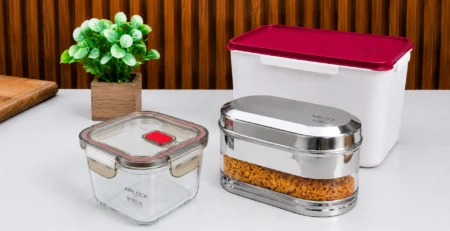
If you buy atta and rice in 5–10 kg packs (as many Indian households do), you need serious capacity — 5 to 24 litres. Large containers like the Airlock Mega Store Container are built exactly for this: they hold an entire grocery pack in one airtight container, so nothing sits in the original bag attracting pests or moisture.
For the fridge
Leftovers and prep need a different logic. You want containers sized to a single dish or a single meal, so food gets used up rather than forgotten. Stackable 300 ml to 2 litre containers keep your fridge tidy and your food traceable. Clear bodies help here — you eat what you can see.
The Smart Approach: Build a Size "Set"
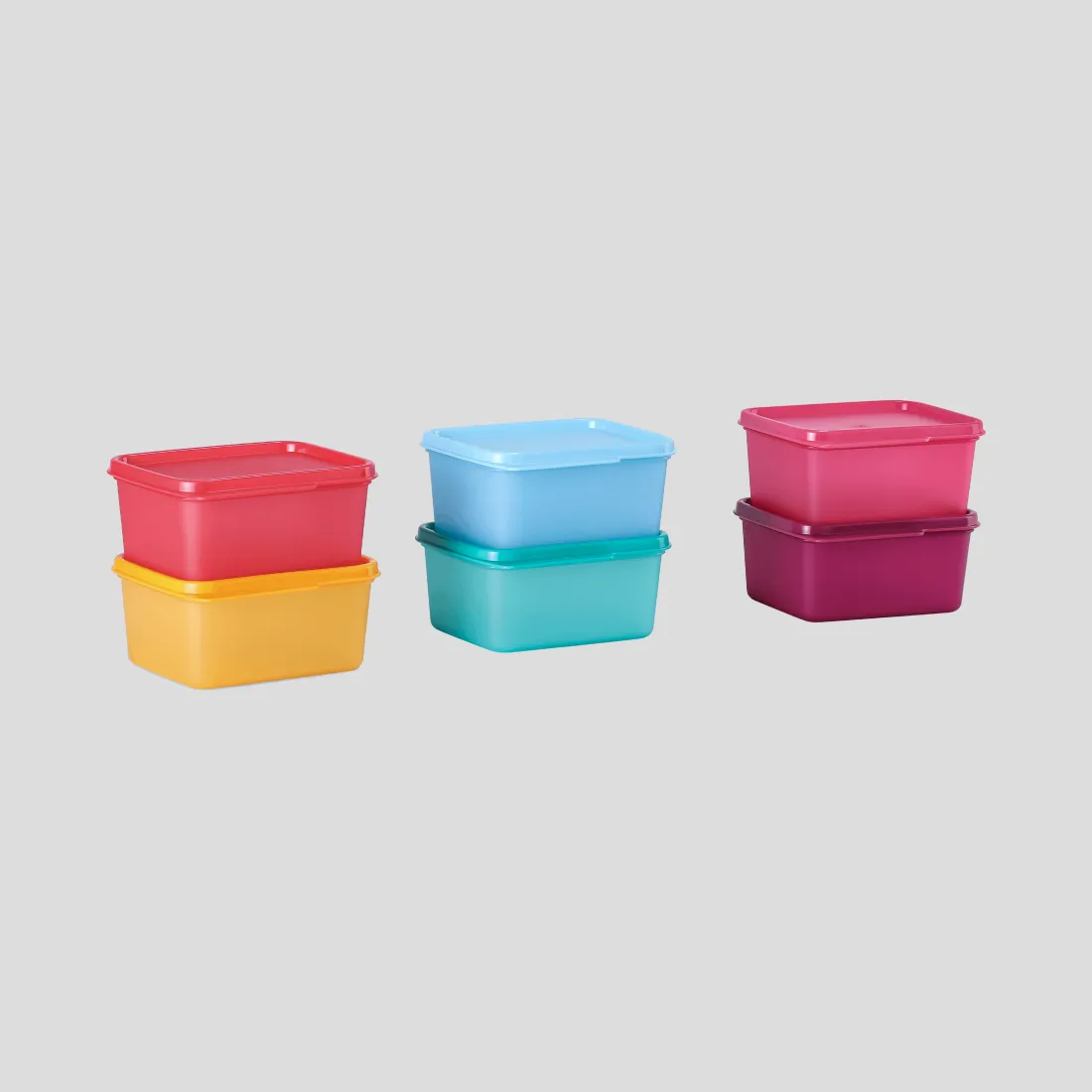
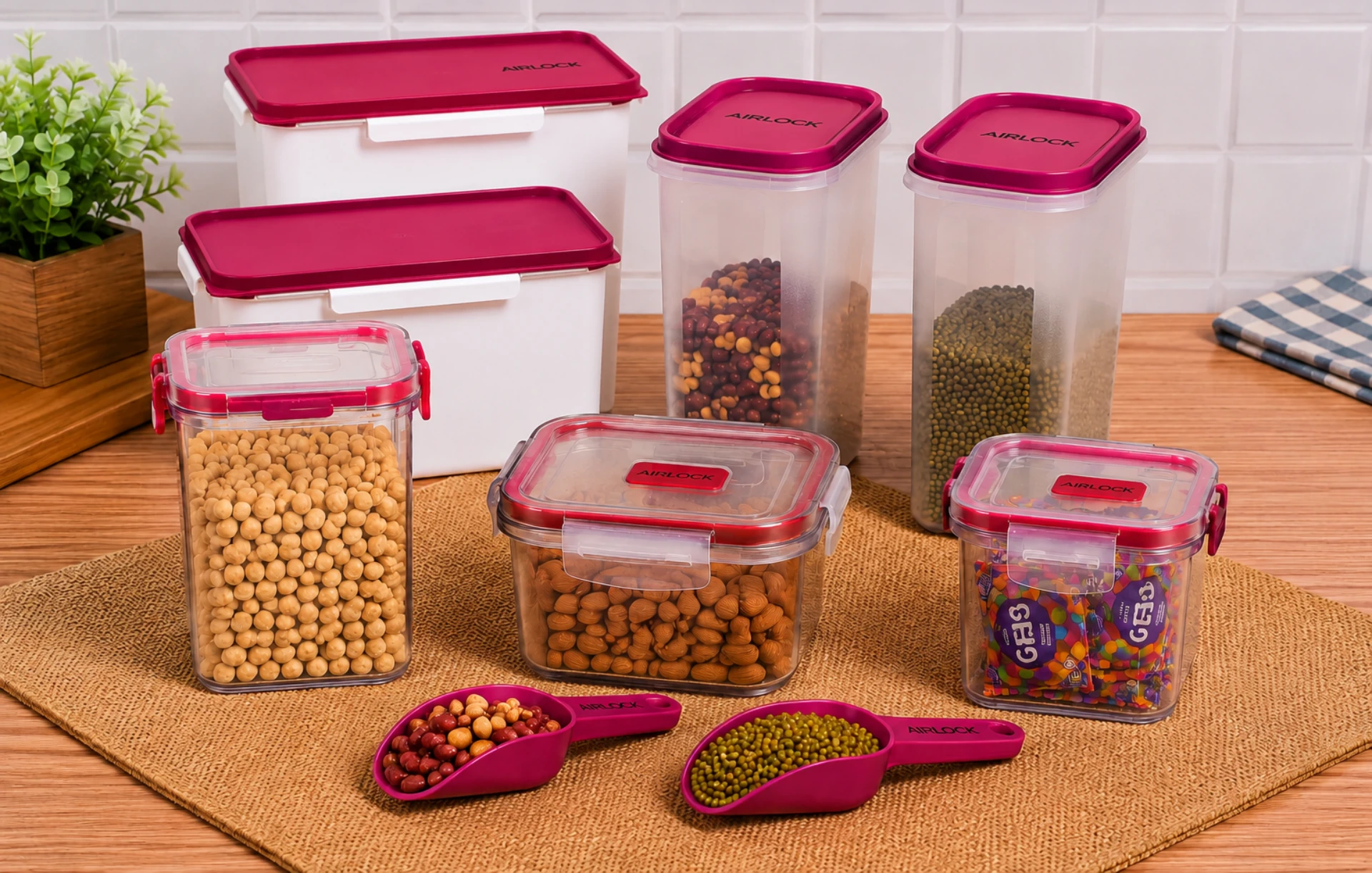
Rather than buying random sizes, the most organised kitchens use a graduated set — a range of sizes that nest and stack together. A typical well-balanced kitchen has:
Buying as a set means everything stacks neatly, looks uniform on the shelf, and you're never left without the right size.
Three Sizing Mistakes to Avoid
Buying only one size. A pantry of identical containers means spices rattle around in oversized jars while your rice overflows a too-small one. Mix your sizes to match your contents.
Forgetting headspace. Always leave a little room at the top. A container packed to the very brim is messy to scoop from and hard to close cleanly.
Ignoring your shelf dimensions. Before buying extra-large containers, measure your shelf height and depth. The biggest container is no help if it won't fit under your cabinet shelf.
Frequently Asked Questions
What size container do I need for 5 kg of atta? A 5.5 to 7 litre container works best. This holds a full 5 kg pack with a little headspace at the top for easy scooping.
How do I convert kg to litres for containers? As a rough guide, 1 litre of container capacity holds about 0.8–0.9 kg of most grains and flours. So multiply your grocery weight by roughly 1.2 to estimate the litres you need, then size up slightly.
What's the best container size for spices? Small 200–500 ml containers are ideal. Spices are used in small amounts but need to stay fresh, so smaller airtight containers preserve aroma better than large jars.
Should fridge containers be big or small? Smaller, meal-sized containers (300 ml–2 L) work best in the fridge. They keep food organised, easy to see, and more likely to get eaten before it spoils.
Is it better to buy containers individually or as a set? A graduated set is usually the smarter choice — the sizes stack and nest together, look uniform, and cover every storage need without gaps.
The Bottom Line
The right container size isn't about buying the biggest or the cheapest — it's about matching capacity to contents. Small jars for spices, medium containers for daily staples, and large airtight containers for bulk grains and flours.
Get the sizes right, and your kitchen runs smoother, your pantry looks better, and your food stays fresher for longer.