

Small Kitchen, Big Storage: Smart Ways to Maximise Every Inch
A small kitchen can feel like a daily battle. Counters disappear under jars and packets. Cabinets are crammed but somehow you can never find anything. And every new purchase sparks the same question: where on earth will this go?
Here's the good news: a small kitchen isn't a storage problem - it's a system problem. With the right approach, even the most compact kitchen can hold far more than it does now, while feeling calmer and more open.
This guide shares practical, proven ways to squeeze maximum storage out of minimum space.
1. Think Vertically - Use Your Height
The biggest untapped space in most small kitchens is upward. Floor and counter space is limited, but wall and cabinet height usually isn't.
Stack airtight containers in tall columns instead of spreading them across a shelf. Add an extra shelf or shelf-riser inside cabinets to double the usable height. Use the wall for hooks, rails, and racks. When you build upward, you reclaim storage you already have but weren't using.
2. Switch to Stackable, Uniform Containers
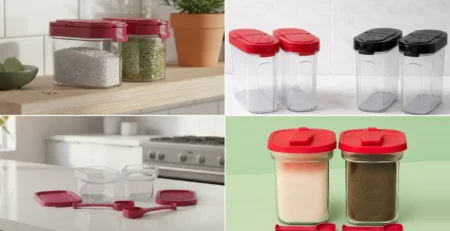
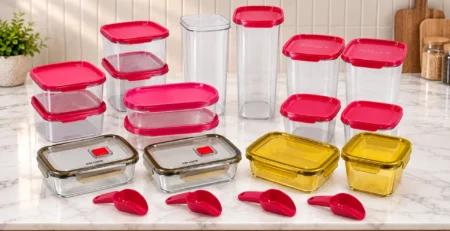
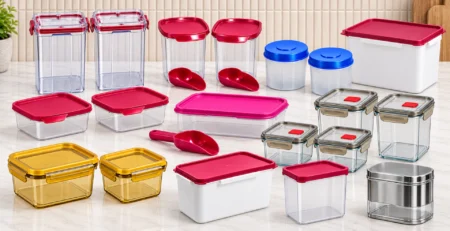
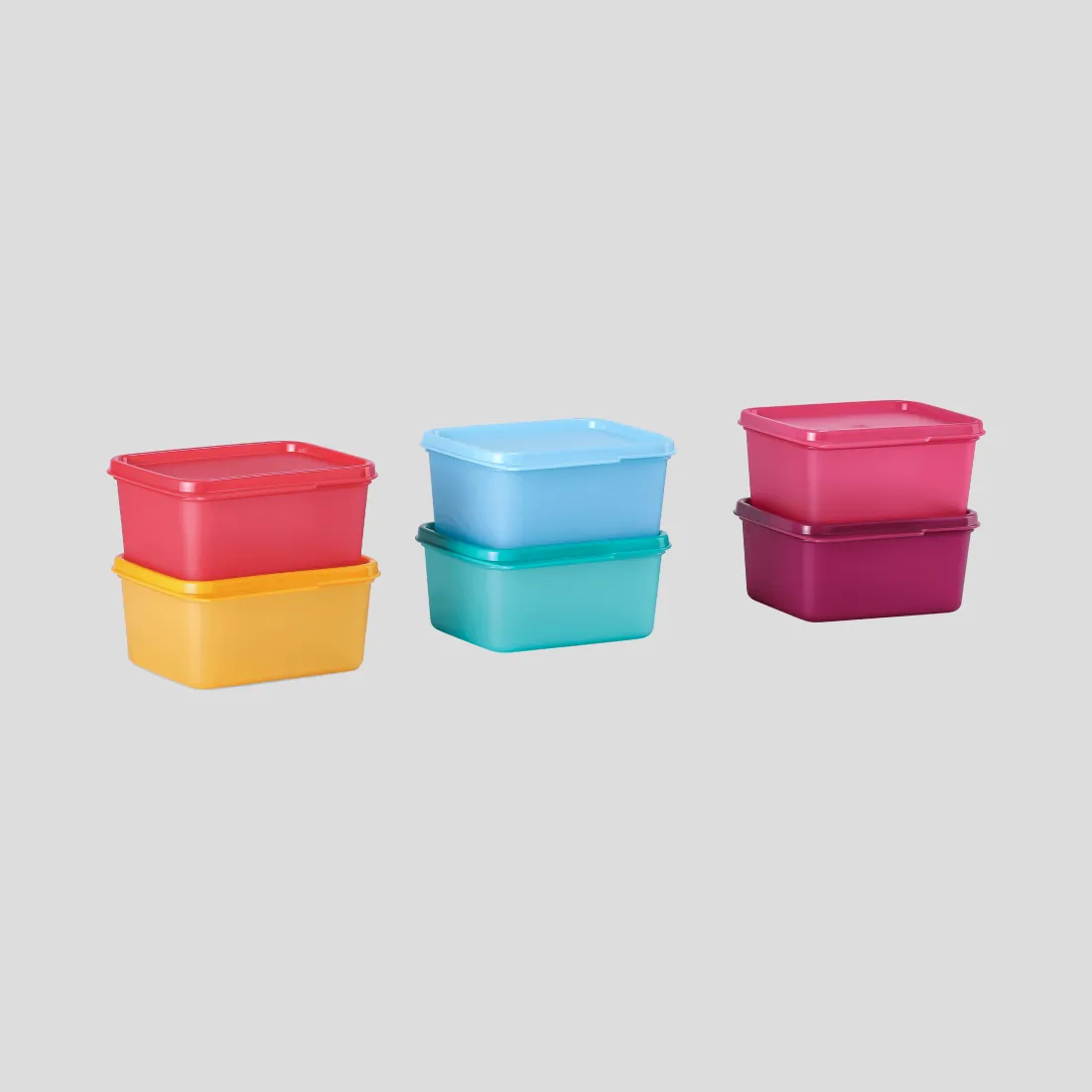
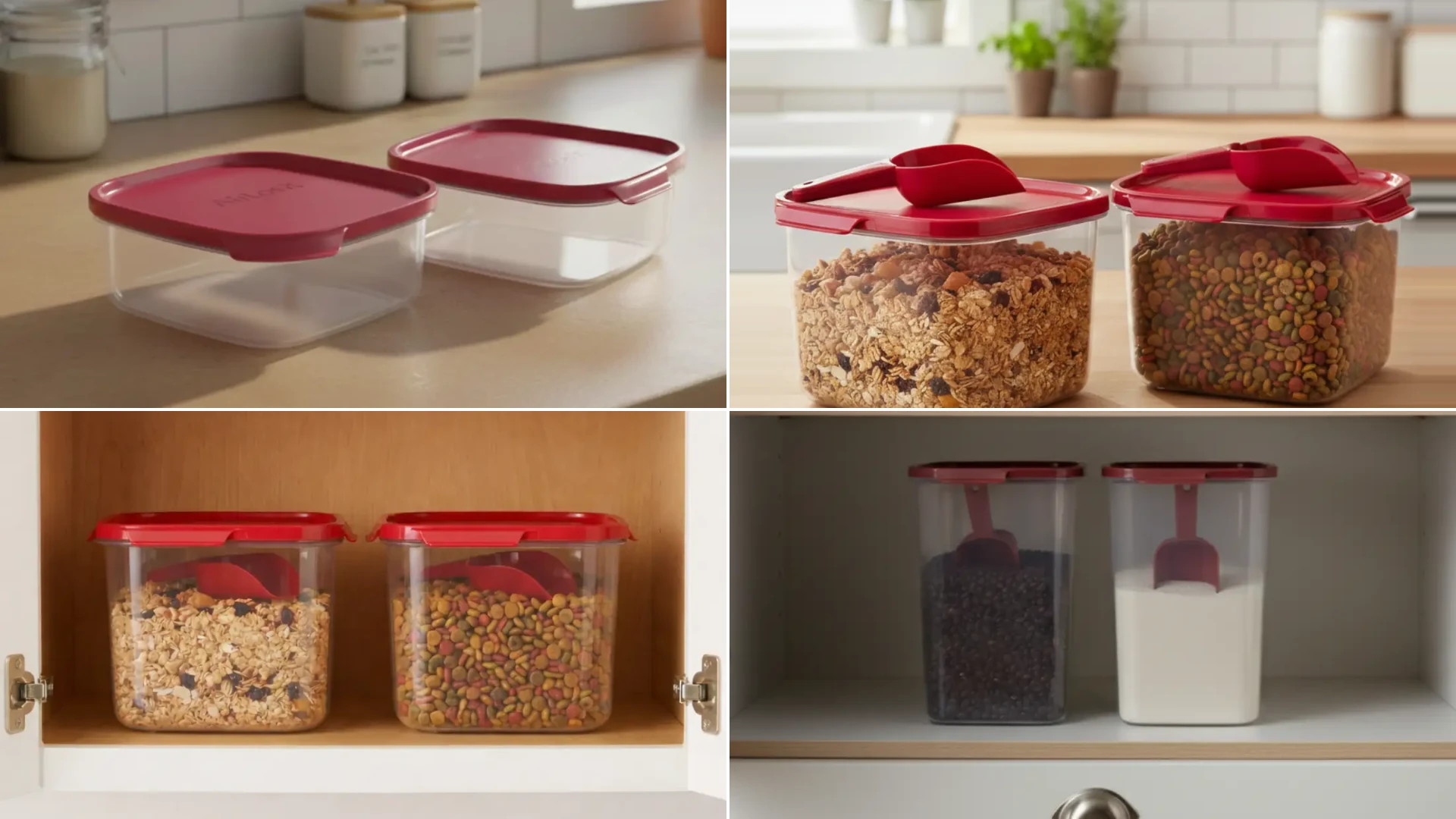
Mismatched jars and random packets waste space because nothing fits together. Uniform, stackable containers solve this instantly - they lock into neat columns, use the full height of a shelf, and leave no awkward gaps.
This single switch often creates 30 - 40% more usable shelf space, simply because everything now stacks instead of scatters. Square and rectangular containers are especially space-efficient, since they tile together without the wasted gaps round jars leave behind.
3. Decant Packets Into Containers
Flimsy packets are the enemy of a small kitchen. They don't stack, they tip over, they spill, and they waste space. Decanting everything into airtight containers makes your storage tidy, stackable, and far more compact - while keeping food fresher too. A shelf of uniform containers holds dramatically more than the same shelf stuffed with floppy bags.
4. Use Clear Containers to Save Time and Space
In a small kitchen, you can't afford to dig around. Clear containers let you see everything at a glance, so you don't buy duplicates (which eat precious space) and you don't lose items at the back. Seeing your whole inventory means you store only what you need.
5. Make the Cabinet Doors Work
The inside of cabinet doors is prime real estate that most people ignore. Add slim racks or holders there for spice jars, foil, small tools, or cleaning supplies. It's space that was doing nothing - now it's storage.
6. Create Zones, Even in a Tiny Space
Zoning matters even more when space is tight. Give each type of item a dedicated spot - cooking staples near the stove, tea and coffee near the kettle, snacks in one place. When everything has a home, you stop the pile-ups that make small kitchens feel chaotic, and you use every pocket of space deliberately.
7. Keep Counters Clear
In a small kitchen, clear counters are everything - they make the space feel bigger and give you room to actually work. Move everyday items (sugar, tea, flour) into airtight containers you can store in cabinets, and keep only the few things you use constantly on the counter. A clear counter is both more functional and more calming.
8. Use the Awkward Spaces
Every kitchen has dead zones: the gap beside the fridge, the deep back of a corner cabinet, the top of the cabinets. Small or narrow containers can slot into these awkward spaces that standard items can't reach. Tall, slim containers are perfect for narrow gaps; grouping items in a caddy makes deep corners accessible.
9. Right-Size Your Containers
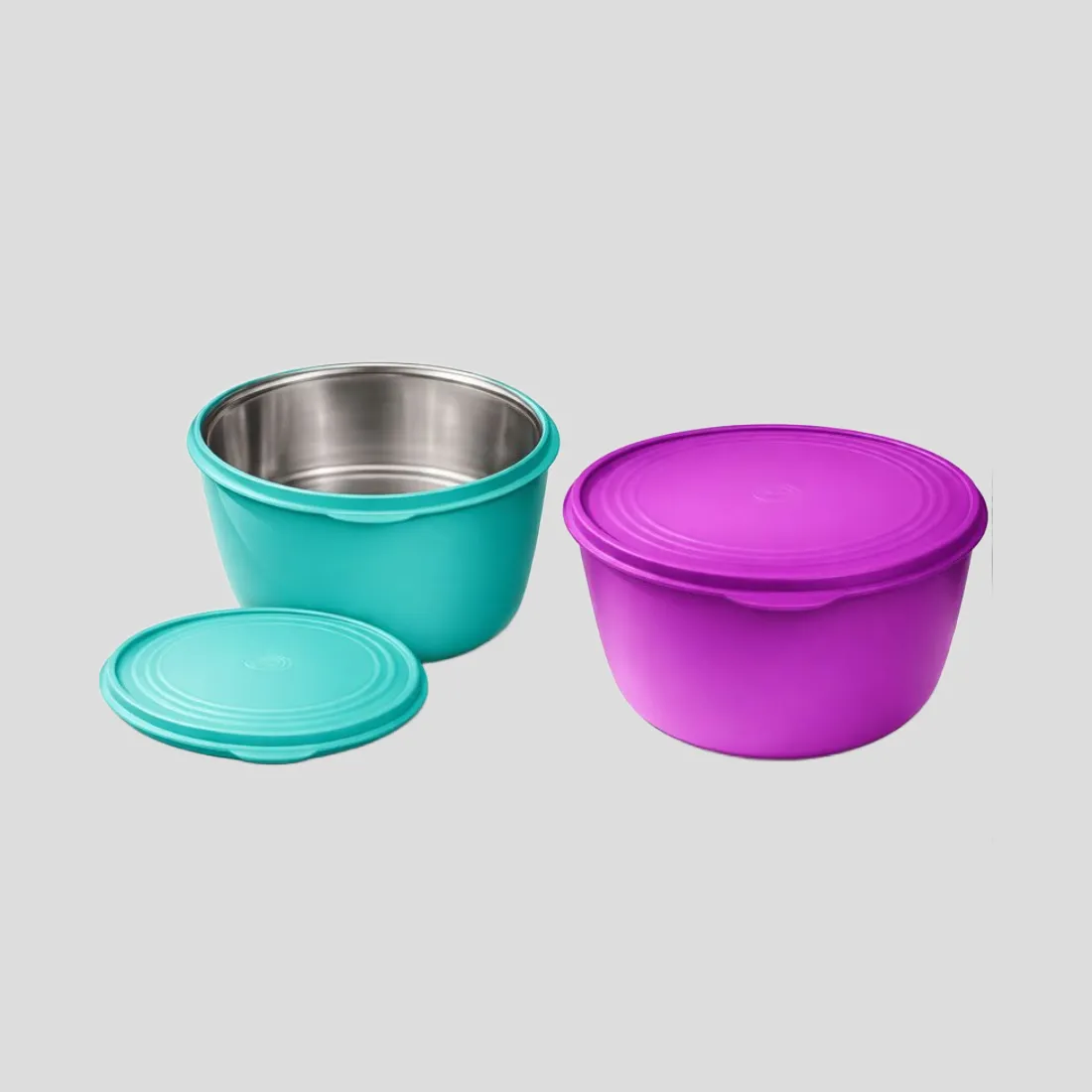
In a small kitchen, buying the biggest container isn't always smart - it might not fit your shelf. Match container sizes to both your contents and your space. Measure your shelf height and depth before buying, and choose sizes that use the space fully without wasting it. The right-sized container in the right spot beats a huge one that doesn't fit.
10. Store Less, But Smarter
Finally, the most freeing idea of all: a small kitchen runs best when you're honest about what you actually use. Clear out duplicate gadgets, expired items, and things you never touch. The goal isn't to cram in more - it's to keep what matters, stored so well that the kitchen feels spacious despite its size.
Quick Wins for Instant Space
If you want results today, start here:
Frequently Asked Questions
How do I create more storage in a small kitchen?
Go vertical (stack and add shelf-risers), switch to uniform stackable containers, decant packets, and use overlooked spaces like cabinet doors and awkward gaps. These add storage without any renovation.
What containers are best for a small kitchen?
Clear, stackable, uniform containers - especially square or rectangular ones, which tile together without wasted gaps. Right-size them to your shelves rather than buying the biggest available.
How do I keep a small kitchen counter clear?
Move everyday items into airtight containers stored in cabinets, keep only constant-use items out, and give everything a designated home so nothing piles up.
Do stackable containers really save space?
Yes, significantly. Because they use the full height of a shelf and leave no gaps, uniform stackable containers often create 30 - 40% more usable space than mismatched jars and packets.
How do I organise a small kitchen on a budget?
Start with what you have: declutter, decant into a few stackable containers, add an inexpensive shelf-riser, and use cabinet doors. Small, cheap changes deliver most of the improvement.
The Bottom Line
A small kitchen doesn't have to mean small storage. By thinking vertically, switching to uniform stackable containers, decanting packets, using overlooked spaces, and storing only what you truly use, you can make a compact kitchen hold more - and feel bigger - than you'd ever expect.
The secret isn't more space. It's smarter use of the space you already have.