

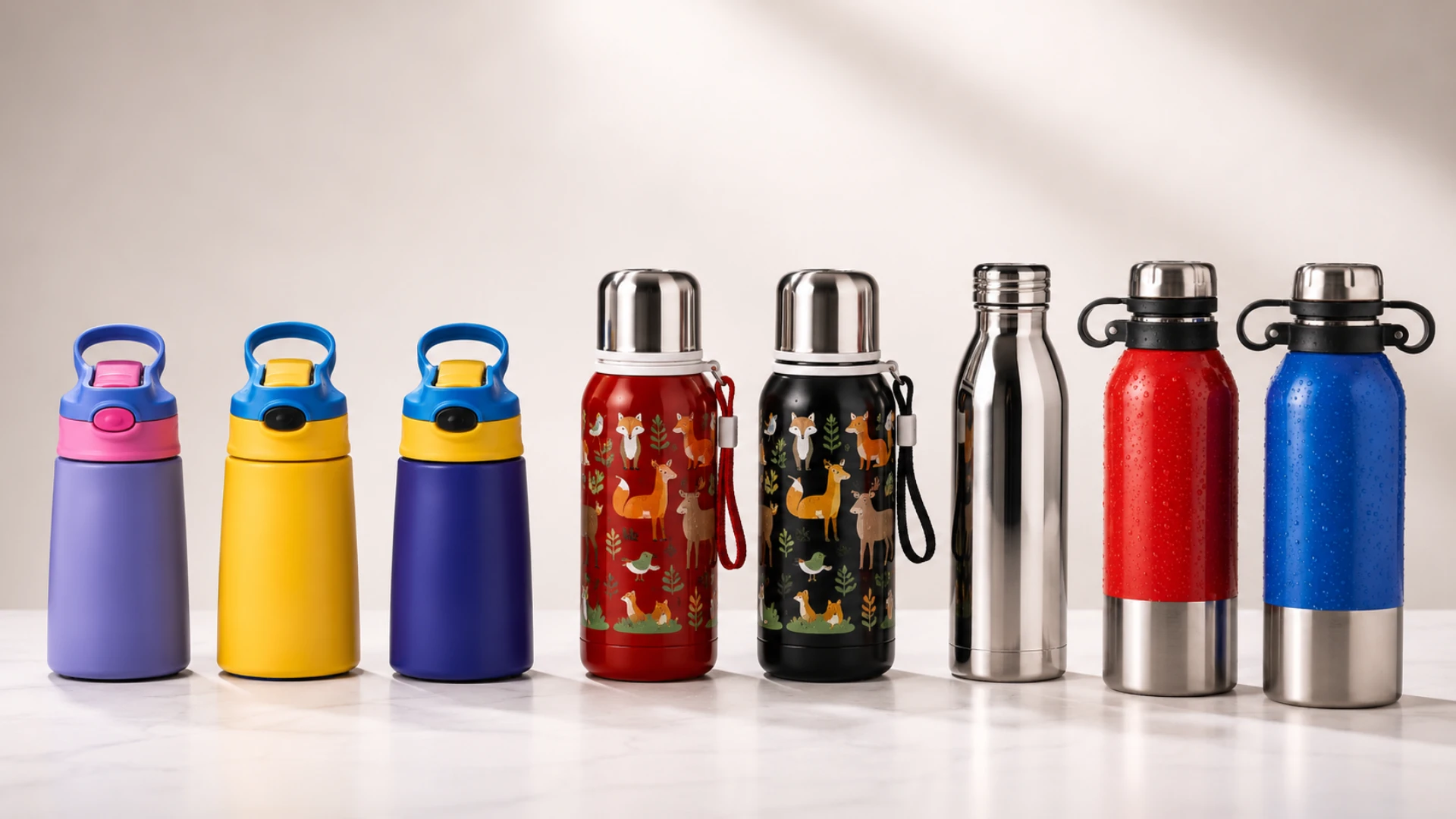
Insulated Bottles 101: How Double-Wall Vacuum Technology Keeps Drinks Hot or Cold for Hours
Pour hot chai into an insulated bottle in the morning, and it's still steaming at lunch. Fill it with cold water on a summer day, and hours later it's still refreshingly cool - no condensation dripping down the sides.
It can feel almost magical. But there's no magic involved - just some clever physics packed into the wall of the bottle. Once you understand how it works, you'll know exactly what to look for when buying one.
This guide breaks down double-wall vacuum technology in plain language, and helps you choose the right insulated bottle for your needs.
First, How Does Heat Actually Escape?
To understand how insulated bottles work, it helps to know how heat moves in the first place. Heat travels in three ways:
Conduction - heat passing directly through a material. Hold a metal spoon in hot tea and the handle warms up; that's conduction.
Convection - heat carried away by moving air or liquid. The warmth rising off a hot cup is convection.
Radiation - heat travelling as invisible waves, the way you feel warmth from a fire without touching it.
An ordinary single-wall bottle does nothing to stop these. Heat conducts straight through the wall, convection carries it off, and it radiates away - so your drink quickly reaches room temperature. A double-wall vacuum bottle is engineered to block all three.
The Secret: A Vacuum Between Two Walls
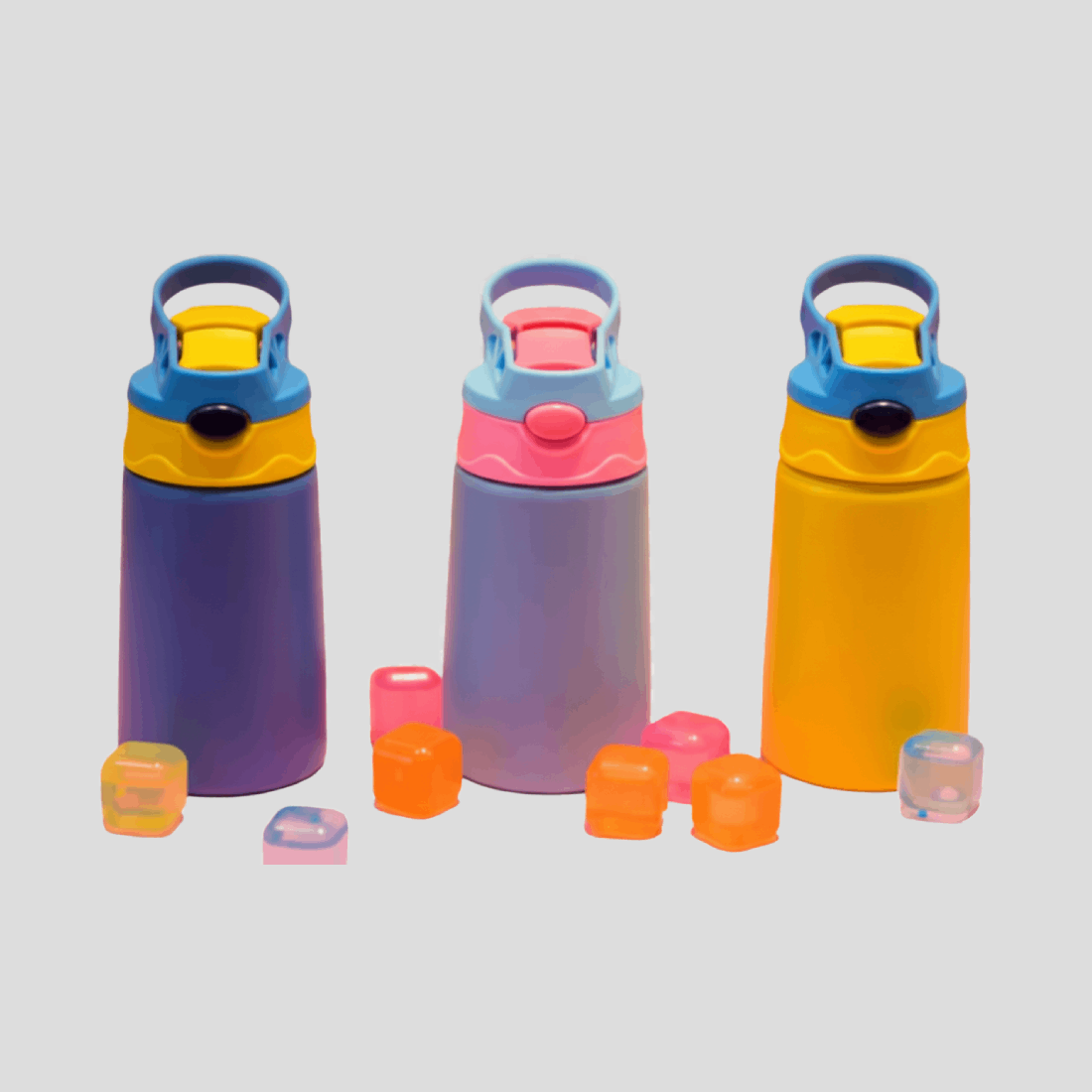
An insulated bottle is essentially a bottle inside a bottle. There are two stainless steel walls - an inner wall that holds your drink and an outer wall you touch - with a gap between them.
Here's the clever part: the air is pumped out of that gap, creating a vacuum.
Why does that matter? Because conduction and convection both need a material to travel through - molecules of air or liquid passing the heat along. In a vacuum, there are almost no molecules. So heat has nothing to travel through. The vacuum essentially stops conduction and convection dead in their tracks.
This is the same principle as the classic "thermos" flask, refined into modern stainless steel bottles.
Blocking the Third Path: Radiation
The vacuum handles conduction and convection, but radiation can still cross empty space (that's how the sun's heat reaches Earth). To block it, quality insulated bottles add one more trick: the inner wall is often given a reflective treatment.
This reflective surface bounces radiant heat back toward your drink - keeping hot drinks hot - and reflects external heat away - keeping cold drinks cold. With all three heat paths blocked, your drink stays at its temperature for hours.
Why the Outside Never Gets Hot (or Sweaty)
Two things people love about good insulated bottles:
The outside stays comfortable to hold. Because the vacuum stops heat from reaching the outer wall, you can hold a bottle full of hot tea without burning your hand.
No condensation with cold drinks. A single-wall bottle of cold water "sweats" because warm air hits the cold surface and forms water droplets. With a vacuum bottle, the outer wall stays close to room temperature, so there's no cold surface for condensation to form on. Your bag stays dry.
Both are a direct result of that vacuum gap doing its job.
What to Look For When Buying an Insulated Bottle
Now that you know how they work, here's how to choose a good one:
Genuine double-wall vacuum construction. This is the core feature. A real vacuum-insulated bottle stays cool on the outside with a hot drink inside - that's the simplest real-world test.
Food-grade stainless steel (SS304). The inner wall should be high-quality, food-safe stainless steel that won't rust, retain odours, or affect the taste of your drink.
A reliable, leak-proof lid. Insulation is only half the job - a secure, leak-proof cap keeps your bag safe and helps maintain the temperature. Check that the lid seals tightly.
The right size for your routine. More on this below.
Wide vs. narrow mouth. A wider mouth is easier to add ice and clean; a narrower mouth is easier to sip from on the move. Pick based on how you'll use it.
Quality of finish. A durable exterior finish resists chips and scratches and keeps the bottle looking good over years of daily use.
Choosing the Right Size
The best size depends entirely on how you'll use the bottle:
Best for travel, trekking, sports, and full-day outings.
A simple rule: if you find yourself constantly refilling, size up; if the bottle feels heavy in your bag, size down.
Getting the Most From Your Insulated Bottle
A couple of habits maximise performance:
Pre-heat or pre-chill the bottle. Before filling with a hot drink, rinse the inside with hot water for a minute (or with ice water before a cold drink). This "primes" the inner wall so your drink holds temperature even longer.
Fill it up. A fuller bottle retains temperature better than a half-empty one, because there's less air space inside.
Keep the lid closed. Every time you open it, some heat escapes. Quick sips beat leaving it open.
Frequently Asked Questions
How long do insulated bottles keep drinks hot or cold?
It varies by bottle and conditions, but quality double-wall vacuum bottles commonly keep drinks hot for several hours and cold for even longer. Pre-heating or pre-chilling the bottle extends this further.
Why doesn't the outside of my insulated bottle get hot?
The vacuum gap between the two walls stops heat from travelling to the outer wall. That's why you can comfortably hold a bottle full of hot tea.
Can I put an insulated steel bottle in the microwave?
No. Stainless steel should never go in a microwave. To warm a drink, heat it separately and then pour it into the bottle.
Why is stainless steel better than plastic for bottles?
Food-grade stainless steel doesn't retain odours or flavours, doesn't leach chemicals, is highly durable, and pairs perfectly with vacuum insulation. It's a long-lasting, hygienic choice.
Can the same bottle keep drinks both hot and cold?
Yes. Double-wall vacuum insulation works both ways - it keeps hot drinks hot and cold drinks cold in the very same bottle.
Do insulated bottles need special cleaning?
Just regular washing with warm soapy water. For the freshest results, occasionally clean with a bottle brush, and let it air-dry fully with the lid off.
The Bottom Line
An insulated bottle is a small piece of brilliant engineering. By sealing a vacuum between two stainless steel walls - and adding a reflective inner surface - it blocks all three ways heat escapes: conduction, convection, and radiation. The result is chai that's still hot at lunch, water that's still cold in the evening, and an outside that never burns your hand or sweats in your bag.
Once you know what to look for - true vacuum insulation, food-grade steel, a leak-proof lid, and the right size - choosing a great bottle becomes easy.